


Why QA Strategy Is Now a CTO-Level Concern

Published on April 6, 2026
One of the quiet shifts in software delivery is that QA strategy no longer stays where it used to. Earlier, it was mostly confined to test plans, release cycles, and QA workflows. Now it reaches much further, into engineering throughput, release readiness, operational stability, and the decisions leaders have to make when teams are expected to move fast without increasing delivery risk.
A recent software engineering case study found that many teams still do not have a structured, consistent way to learn from failures, which makes recurring issues harder to prevent over time. That gap becomes much more expensive as delivery grows faster and systems become harder to coordinate.
That is why QA strategy in software testing now belongs much closer to the CTO than it once did.
Why Does QA Break When Testing Happens Too Late?
When testing is pushed too close to release, the problem is not always obvious at first.
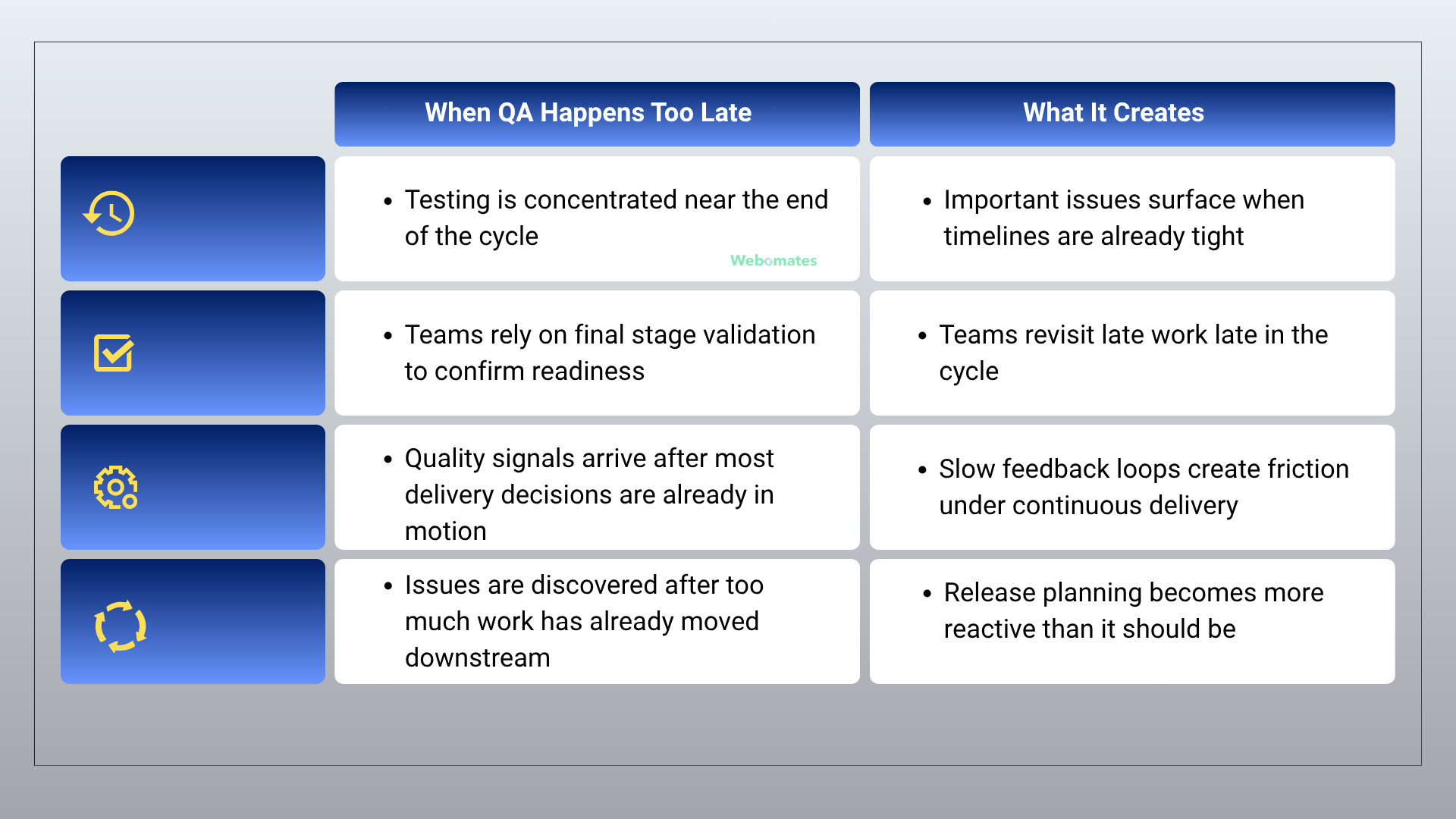
That is why late-stage QA tends to break under faster release cycles. It produces feedback too late to be fully useful.
What Does a Strong QA Strategy Look Like Across Engineering Teams?
Once you stop testing too late, the impact becomes visible across the delivery system. Teams will have fewer last-minute surprises, release conversations will become clearer, and quality will start supporting execution instead of interrupting it.
A stronger setup usually results in:
- Teams getting useful quality feedback early enough to act before release plans are disrupted
- Engineers, QA, and delivery leads working from the same understanding of readiness and risk
- Testing effort staying focused on the areas most likely to affect release confidence
- Quality work helping decisions move forward instead of slowing them down at the end
This is also when QA starts supporting delivery in a more consistent and reliable way across engineering teams.
Where Does AI Fit Into QA Strategy?
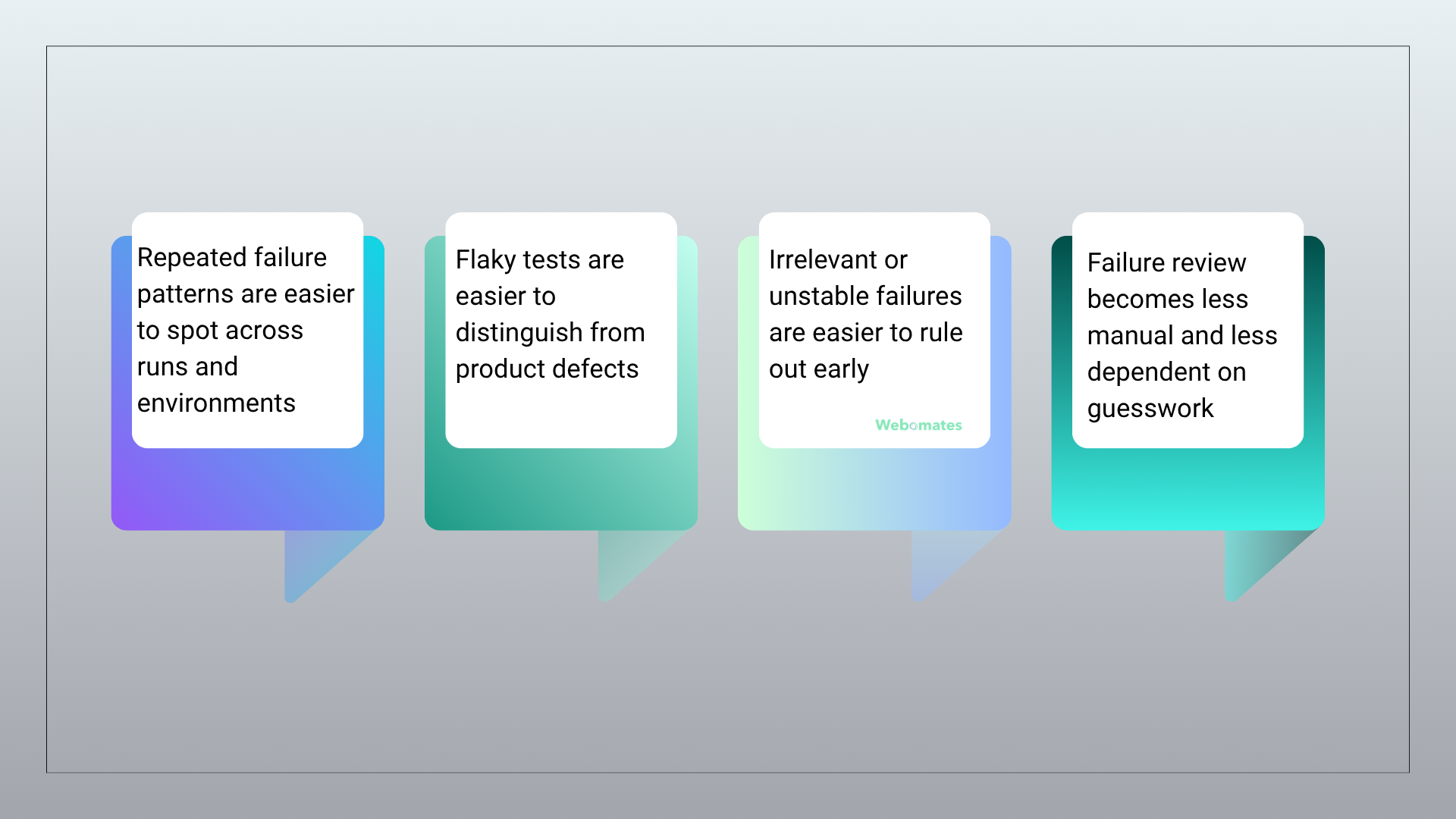
AI is most useful in quality assurance strategy when it helps teams interpret test output more clearly. This reduces the amount of engineering time and effort spent investigating issues that do not always affect release outcomes.
That becomes especially useful when:
Why Does QA Strategy Matter to CTOs and Engineering Leaders?
At the leadership level, QA strategy is not just about how testing is executed. It starts influencing how software quality is defined, aligned, and maintained across teams.
Engineering leaders need to make sure that quality expectations are clear, teams work with consistent standards, and delivery can scale without quality becoming a recurring source of friction.
There are also a few other challenges that leadership has to think about:
- Quality cannot be owned by one function alone
- Teams start working differently when quality expectations are not aligned
- Release decisions get harder when there is no consistent way to judge readiness
- Scaling delivery becomes harder when quality is handled differently across teams
How Does QA Strategy Improve Release Confidence?
QA strategy improves release confidence when teams can judge readiness more clearly. That usually depends on whether testing can show what is stable, what needs attention, and where the risk exists before deployment.
This becomes easier when:
- Teams can see release risk more clearly before deployment
- High-risk changes are easier to identify earlier
- Release decisions rely less on instinct and more on evidence
- Teams have more confidence in what can be released safely
Webo.ai helps here by reducing false failures, keeping test automation up to date through self-healing, and giving teams clearer visibility into defects and release risk before deployment.
What QA Metrics Should Engineering Leaders Track?
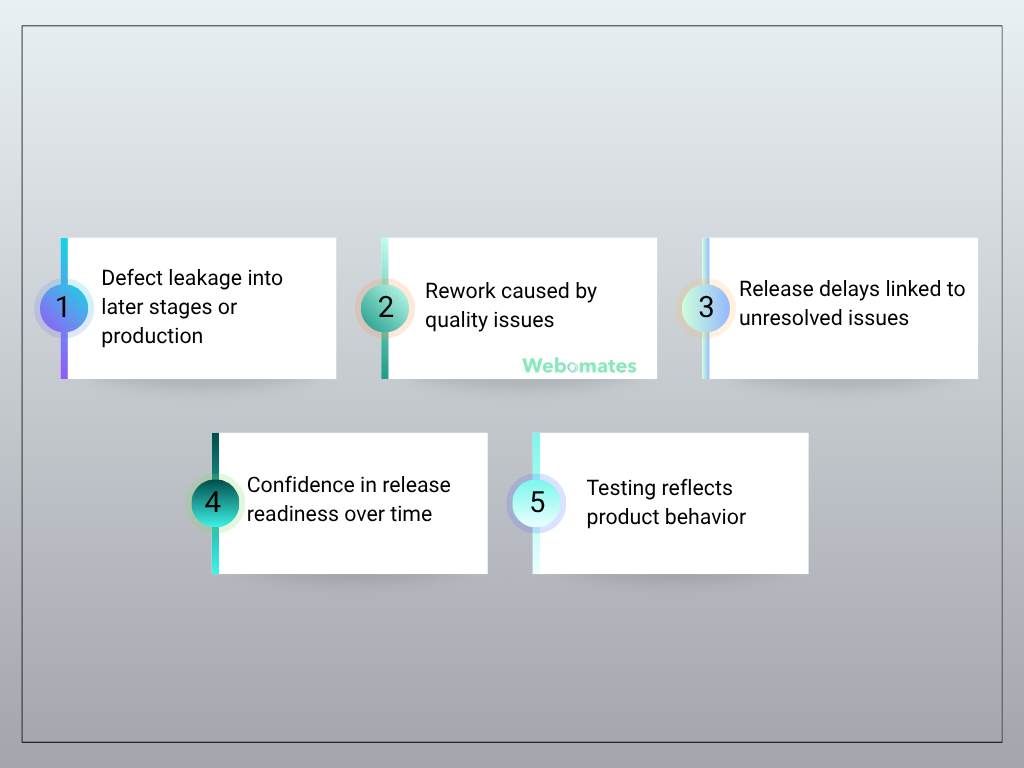
Not every quality metric is equally useful at the leadership level. What matters more is whether the right metrics can show where delivery risk is building, how much disruption quality issues are creating, and how often those issues are affecting release outcomes.
Some of the most useful ones to track include:
Conclusion
A strong quality assurance strategy helps engineering teams make better release decisions, reduce avoidable disruption, and catch issues before they create larger delivery problems. As release pressure increases, teams need a more reliable way to keep quality from falling behind.
Webo.ai helps by making test creation, execution, and maintenance easier to manage as QA demands grow. It also reduces the manual effort needed to keep test coverage current as products evolve. This makes it easier for teams to maintain quality without adding extra work late in the delivery cycle.
Ready to Elevate Your QA Strategy?
Join the engineering leaders using Webo.AI to accelerate releases and reduce delivery risk.
Start Free TrialFAQs
Why is QA strategy becoming more important for CTOs?
For many organizations, software quality now affects release confidence, delivery timelines, operational stability, and engineering efficiency. That is why QA strategy for CTOs is becoming less about testing oversight and more about how delivery risk is managed across the organization.
What role does shift left testing play in a stronger QA strategy?
Shift left testing helps teams catch quality issues earlier in the development cycle, when they are usually easier and less disruptive to fix. It becomes useful when testing is not treated as a final checkpoint but as something that starts influencing design, development, and change validation much earlier.
What does a continuous testing strategy improve?
A stronger continuous testing strategy helps teams reduce gaps between change, validation, and release decisions. It becomes most useful when testing is expected to keep pace with ongoing development rather than happen in isolated phases. For engineering leaders, this usually improves consistency more than speed alone.
How can engineering leaders measure software testing ROI more effectively?
Software testing ROI is easier to understand when teams look beyond pass/fail counts and start measuring outcomes such as escaped defects, rework, release delays, and confidence in release readiness. The return usually shows up in fewer avoidable disruptions and less engineering time spent recovering from preventable quality issues.