Regression Testing for Small Teams Made Easy with AI

Published on July 14, 2025
Introduction
A balancing act that many smaller teams face - release features faster without compromising on quality . Regression testing is essential to ensure application stability, but for smaller teams, it can quickly become a time-consuming bottleneck.
Why Regression Testing Fails for Small Teams
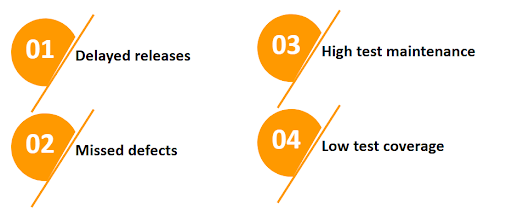
Traditional automation tests can take a considerable amount of time to complete, which impacts the team’s velocity and release timelines. Dynamic applications cause frequent false positives and flaky tests. Edge cases are missed. They also need continuous maintenance, and small teams simply don’t have the bandwidth, resources, or budget to maintain large test suites week after week.
How AI-powered regression testing helps!
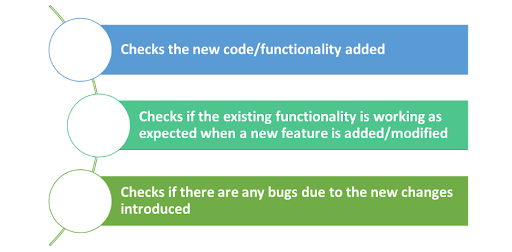
Regression testing ensures that new changes don’t break existing features by re-running functional and non-functional tests With AI, small teams can shift from reactive testing to proactive quality assurance.
The Webomates AI Advantage
The IBM research survey highlights the critical role AI plays in modern teams. It ranks IoT, cloud computing, and AI as the top three technologies expected to help deliver results.
Embracing AI in regression testing is not just about fixing bugs; it’s about proactively predicting potential issues and delivering flawless, secure, and user-friendly experiences across all sectors.
Let us look at the ways AI can help small teams and how Webomates can support
1• Intelligent Test Case Creation:AI can identify new test scenarios and generate test cases, including edge cases that might be missed manually, improving overall test coverage.
Bonus Insight: Tools like AI Test Strategy and Creator use Webomates’ AI Modeller engine to create and automate appropriate test cases, reducing the human work required to write or maintain the test suite by more than 50%.
2• Test Data Generation:Preparing the right test data is time-consuming. AI can generate synthetic test data automatically, improving the speed and depth of test execution.
3• Defect Prediction:
AI can identify defects early, automatically assign them to the correct team member using self-learning algorithms and intelligent classification techniques. It also determines the root cause of defects and incidents, identifies gaps, and understands patterns of the defects that might occur in the future.
Bonus Insight: AI tools such as the AI Defect Predictor tool can predict defects, providing testers with actionable insights.
4• Maintain and Update Automated Test Scripts:
Regular updates are needed to the test scripts to accommodate changes in the application’s UI or functionality. AI can also adapt and heal the regression test suite based on the changes made in the application.
Bonus Insight: Webomates discovered that 80% of the time goes in maintaining the automation. AiHealing can help to automatically detect and correct issues in test scripts when the UI changes.
Webomates: Multi-type Regression Testing for Small Teams
Webomates: is a next-gen regression testing platform that combines AI, automation, and a human-in-the-loop model to offer enterprise-grade testing. With all teams working in an agile CI/CD model, Webomates helps you scale up by getting build checks done via the following regression services.
| Regression Type | Use Case | How it Helps Small Teams |
|---|---|---|
| Smoke Regression | Testing small modules and checking all functions end-to-end. | Typically done in 15 minutes, this is where you only get a Pass/Fail report of the test cases, based on which you can look for the defects. |
| Full Regression | Involves reviewing the entire application or website again to ensure that all functional areas are working as expected and that none of the current functionalities are impaired. |
Results within 24 hours to provide the complete analysis of the application. Also includes Exploratory testing to make sure the application is not breaking anywhere. |
| Overnight Regression | Tests high-priority and specific modules impacted by the change | Testing can be completed within 8–12 hours. |
| Security Regression | Rechecks security-critical areas after code changes | Includes security test cases for compliance |
The result?
Webo.AI (Webomates) makes sure that each line of code is thoroughly inspected and verified from the very beginning of development to the product’s release. Teams trust Webo.AI to get enterprise-grade regression coverage, without adding any additional infrastructure, resources, or tools.
Get enterprise-grade regression coverage without the overhead. Start a free trial with Webo.AI and streamline regression testing with AI—speed, coverage, and confidence for small teams.
Ready to Streamline Regression Testing for Your Small Team?
AI-powered regression testing without the maintenance burden. Webo.AI helps small teams accelerate releases, reduce script maintenance, and boost quality—try it free.
Start Free TrialPlease click here and schedule a demo, or reach out to us at [email protected].
FAQs
Why do small teams need regression testing?
When small teams work fast and release updates often, even a tiny code change can break something that was working fine before. Regression testing helps catch those issues early, keeping the product stable and reliable for users.
With limited time and resources, running all those tests can feel overwhelming. Webomates makes this easier by offering different regression options—smoke, overnight, full, and security—so teams can choose what best fits their needs. It also automates most of the heavy lifting, making testing faster and easier without slowing down releases.
What are the benefits of AI regression testing for startups?
For startups, time and resources are often tight—every release needs to be quick, reliable, and efficient. AI regression testing helps by automating repetitive test cases, identifying defects faster, and reducing the time spent on manual checks.
It can also spot patterns in bugs and predict areas that are most likely to fail, so that teams can focus their efforts in areas where it matters the most. Simply put, AI makes regression testing smarter and faster, helping startups maintain quality and scale without adding heavy QA overhead.
Webomates extends these benefits even further. It combines AI with automation and human validation to cover everything from quick smoke tests to full or overnight regressions. Its AI models can create new test scenarios, generate data, and even adapt test scripts automatically when the application changes. This helps reduce maintenance work that often slows down small teams. For startups trying to balance speed with reliability, this kind of approach helps keep testing consistent and release cycles smooth, without needing a large QA setup.
Which regression testing tool is best for small teams?
Choosing the best regression testing tool depends on what you need most—speed, coverage, or ease of use. Webomates helps teams reduce manual effort by combining automation with AI and human review.
This allows smaller teams to manage testing without spending too much time on setup or script maintenance. Ultimately, the best tool is the one that fits your workflow, provides quick feedback, and helps maintain quality while moving fast.
What challenges do small teams face when doing regression testing?
Small teams often struggle to balance speed and quality. Regression testing can be time-consuming, and with limited resources, it’s hard to run thorough checks after every change. Maintaining test scripts, managing flaky tests, and keeping up with frequent updates can quickly eat into development time.
Another common challenge is prioritization—deciding what to test and what to skip when deadlines are tight. Without a dedicated QA team, small teams risk missing hidden bugs or introducing new ones during quick releases.
Webomates help overcome these hurdles with AI-driven regression testing. Instead of spending hours maintaining scripts or rerunning old tests, it helps teams to focus on reviewing results and improving test coverage.
